
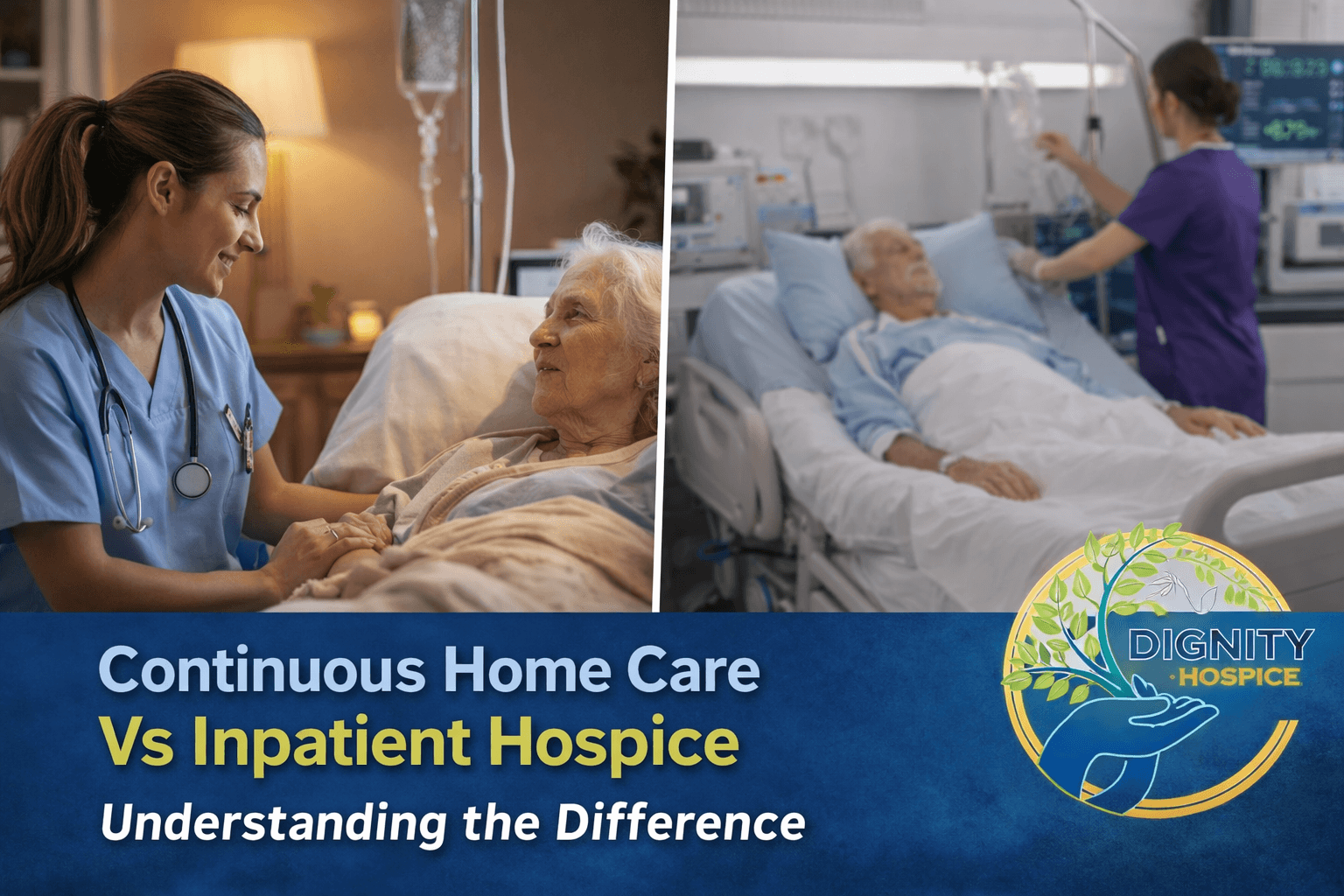
Hospice care changes as symptoms change. Most families start with routine hospice support at home. At times, a patient’s needs rise fast. That moment can feel overwhelming. Two hospice services address those higher needs. Continuous home care brings extended nursing support into the home during a short crisis. General inpatient care moves the patient to a facility for symptom control when home care cannot meet the need.
Dignity Hospice guides families through these decisions with a focus on comfort, dignity, and calm communication. A clear framework helps families act without panic.
Understanding The Two Levels Of Care
Both services remain hospice. Both focus on comfort rather than cure. The setting and staffing pattern differ, based on symptom severity and safety.
The next sections explain each level in practical terms.
What Continuous Home Care Means
Continuous home care provides extended nursing support in the home during a short crisis period. The goal is stabilisation. Nurses monitor symptoms closely, adjust medication plans, and coach carers through urgent moments.
Common triggers include severe pain, breath distress, agitation, repeated vomiting, or rapid decline that needs close clinical oversight.
What General Inpatient Care Means
General inpatient care takes place in an inpatient setting. The focus is intensive symptom management. The environment can support monitoring and rapid medication changes that may not feel safe at home.
Families often choose this level when symptom distress stays high or when the home setting cannot support safe care.
Signs That Point To Continuous Home Care
Families often ask for a rulebook. Hospice decisions rarely follow a perfect script. Signs and patterns can guide choices.
The next sections list signs that often match continuous home care.
Symptom Crisis With A Safe Home Setting
Continuous home care can fit when the home remains safe and a carer remains present, yet the patient needs more clinical support for a short time.
Signs may include
- Pain that breaks through the current plan
- Breath distress that triggers panic or fear
- Restlessness that disrupts sleep and safety
- Medication changes that need close observation
Caregiver Capacity Still Holds
Continuous home care often assumes a caregiver remains involved. The nurse can guide tasks and reduce anxiety. Families can learn what signs mean and what actions help.
A Goal To Stay In The Home
Many patients want to stay at home through a crisis. Continuous home care can support that preference when stabilisation remains realistic.
Signs That Point To General Inpatient Care
Inpatient care can reduce suffering when symptoms stay hard to control at home. Safety matters too. Some homes lack space, equipment, or caregiver capacity for complex care.
The next sections describe signs that may suggest inpatient hospice.
Symptoms That Remain Uncontrolled
Persistent distress can call for inpatient support. That can include severe pain, breathing crisis, or agitation that stays intense after several plan changes.
Safety Risks In The Home
Safety can drop when falls risk rises, lifting support is not available, or the home cannot support equipment needs. Inpatient care can provide a controlled environment.
Limited Caregiver Support
Some families have one primary carer with limited backup. Exhaustion can create risk. Inpatient care can support the patient and protect the family system.
A Clear Comparison For Families
A side-by-side view can reduce confusion. The core question often comes down to this. Can the hospice team stabilise symptoms safely in the home with extended nursing support. If not, inpatient care may suit the need.
The next section offers a simple comparison.
Continuous Home Care And Inpatient Care Compared
| Feature | Continuous Home Care | General Inpatient Care |
|---|---|---|
| Setting | Patient home | Inpatient facility |
| Main Goal | Stabilise a short crisis | Rapid symptom control |
| Staffing Pattern | Extended nursing presence | Facility-based clinical support |
| Family Role | Caregiver present and supported | Family visits and updates |
| Typical Trigger | Acute symptom flare | Persistent severe symptoms |
What Families Can Expect During The Change
Transitions can feel fast. Hospice staff can guide each step, from transport planning to medication continuity. Clear communication reduces risk.
The next sections explain what often happens during a shift in care level.
Clinical Reassessment And Plan Update
The hospice nurse assesses symptoms and documents changes. The medical director may review medications. Families receive a clear explanation of the plan, with plain language and direct next steps.
Communication With The Family Contact
One family point of contact can reduce confusion. Updates can cover symptom changes, medication plans, and what to expect over the next day. Families can ask for written notes or a printed plan for clarity.
Returning To Routine Hospice Care
Many patients move back to routine hospice once symptoms stabilise. That return can include equipment changes and a revised visit schedule. Families can use the experience to strengthen the home plan.
Decision Questions That Help In Metter
When stress rises, decision quality can drop. A short set of questions can keep choices grounded.
The next sections offer questions families can use during a care level decision.
Questions About Symptoms
- What symptom drives the crisis right now
- What plan changes already happened
- What level of monitoring does the patient need today
Questions About Home Safety
- Can transfers happen safely
- Can the home support the equipment needed
- Does the caregiver have enough rest and backup
Questions About Patient Wishes
Patient goals matter. Some people want to stay at home in every possible scenario. Others prioritise rapid relief, even when that means a facility stay. Hospice staff can support these conversations with sensitivity.
Choosing between continuous home care and general inpatient care can feel daunting. A clear plan, strong clinical guidance, and honest communication can bring calm. Dignity Hospice supports families in Metter through these decisions with comfort and dignity as the constant.